California Civil Code section 1950.5 generally gives a landlord no more than 21 calendar days after a tenant vacates to return the remaining security deposit and provide an itemized statement for any amount kept. The packet may also need supporting bills, receipts, work details, and photographs, depending on the deductions.
What starts the 21-day clock?
The most useful date is the day you actually vacated and returned possession of the rental, not simply the day you began packing. Save anything that makes that handoff clear, such as a key-return receipt, move-out email, property-manager message, or final inspection record.
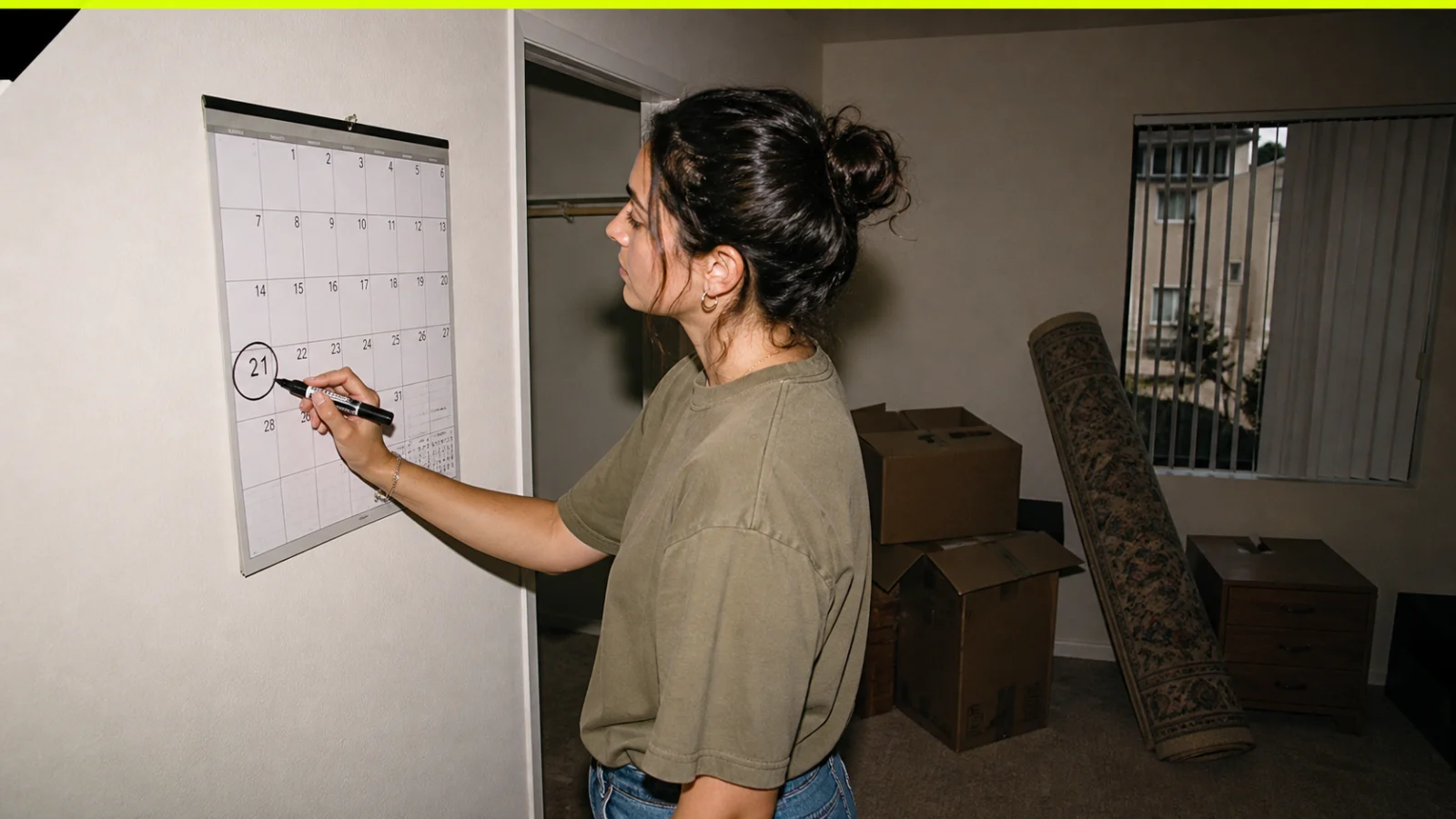
Count calendar days from that move-out date. Weekends and holidays are part of the count. Keep the calculation visible in your records so another person can understand it without reconstructing your entire move.
- The date you fully moved out
- The date and method used to return keys
- Any written confirmation that possession was returned
- The address or email you provided for the deposit accounting
What should arrive within 21 days?
If the landlord returns the full deposit, the return itself may be the main event. If any amount is withheld, the landlord generally must provide an itemized statement showing the amount of the security received, what happened to it, and the basis and amount of each deduction.
For repair and cleaning deductions, California law can require more than a list of numbers. If the landlord or an employee did the work, the accounting should reasonably describe the work, time spent, and reasonable hourly rate. If someone else did it, a bill, invoice, or receipt is generally required. Materials and supplies also need documentation. Photographs are now part of the statutory documentation for covered repair and cleaning deductions.
What if the work is not finished by day 21?
The law allows a good-faith estimate when repairs cannot reasonably be completed in time or the landlord has not yet received the supporting documents. That estimate does not end the paper trail.
Within 14 calendar days after the repair is completed or the documentation is received, the landlord generally must send the completed information and handle any remaining deposit balance. Save the first estimate and the later documents as separate events in your timeline.
What to do on day 22
Do not start with a long emotional argument. Start with a clean record. Put the move-out date, day-21 date, amount paid, amount returned, documents received, and missing items on one page.
California Courts recommends writing to the landlord when the full deposit was not returned within 21 days or the tenant disputes the deductions. A focused letter should state the amount requested, why you are requesting it, and the documents or dates that support the request. Keep a copy and proof of delivery.
- Confirm the move-out and key-return date.
- List every deposit payment and refund received.
- Attach the itemized statement, invoices, photos, and messages you received.
- Mark what is missing or unclear without guessing why.
- Send a concise written request and preserve delivery proof.
The practical point
The 21-day rule is valuable because it turns a vague feeling that something is wrong into a dated checklist. The deadline alone does not automatically decide a dispute, and RentClaw does not determine whether a violation occurred. It does give you a cleaner way to compare the return, deductions, documents, and dates before you decide what to send next.
How this timeline was checked
This timeline was reviewed on August 9, 2026 against the current text of Civil Code section 1950.5, including the 21-calendar-day accounting rule and the 2026 electronic-return and multiple-tenant provisions, plus the California Courts security-deposit guide and the Attorney General's tenant alert.
It is designed as a date-and-document map, not a legal conclusion. Cite the official sources below for the rule itself and use this page for the practical sequence of records to preserve.
Clear answers before your next step.
Are weekends included in California's 21-day deposit deadline?+
The statute uses calendar days, so weekends are included. Count from the date the tenant vacated and returned possession, then keep the underlying move-out proof with the calculation.
Does the landlord have to finish every repair within 21 days?+
Not always. A landlord may use a good-faith estimate when work or documentation cannot reasonably be completed in time, then generally must provide the completed documentation within 14 calendar days after completion or receipt.
Does a late statement mean the tenant automatically wins?+
No automatic outcome should be assumed. Timing, documentation, the reason for any delay, and the facts of the deductions can all matter. Organize the record and consider legal help for advice about a specific dispute.
Official sources used for this guide
- California Civil Code § 1950.5
- California Courts security deposit guide
- California Attorney General security deposit alert
This article provides general self-help information for California renters. It is not legal advice, does not create an attorney-client relationship, and does not predict the outcome of a dispute. Rules and local protections can change.