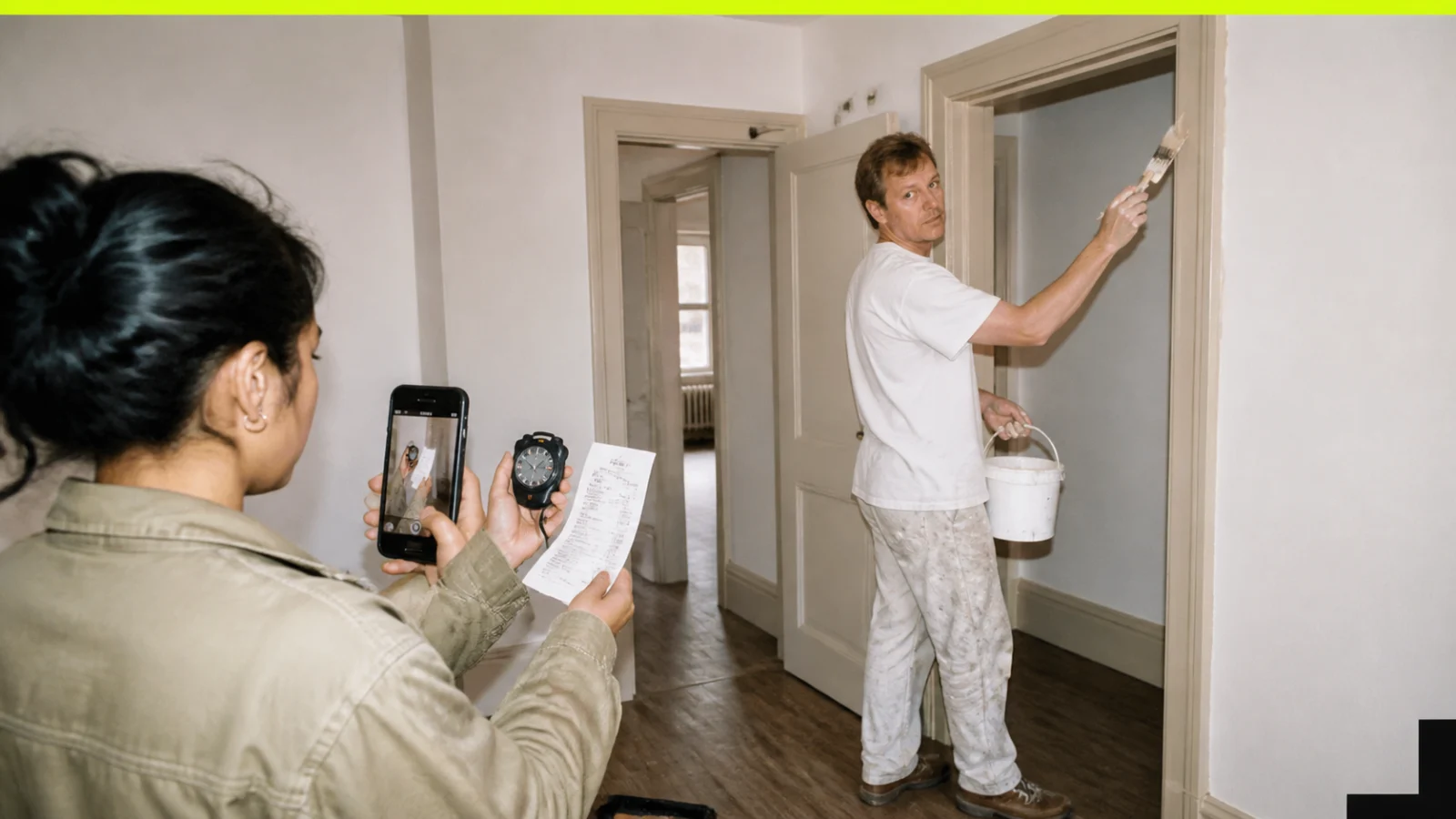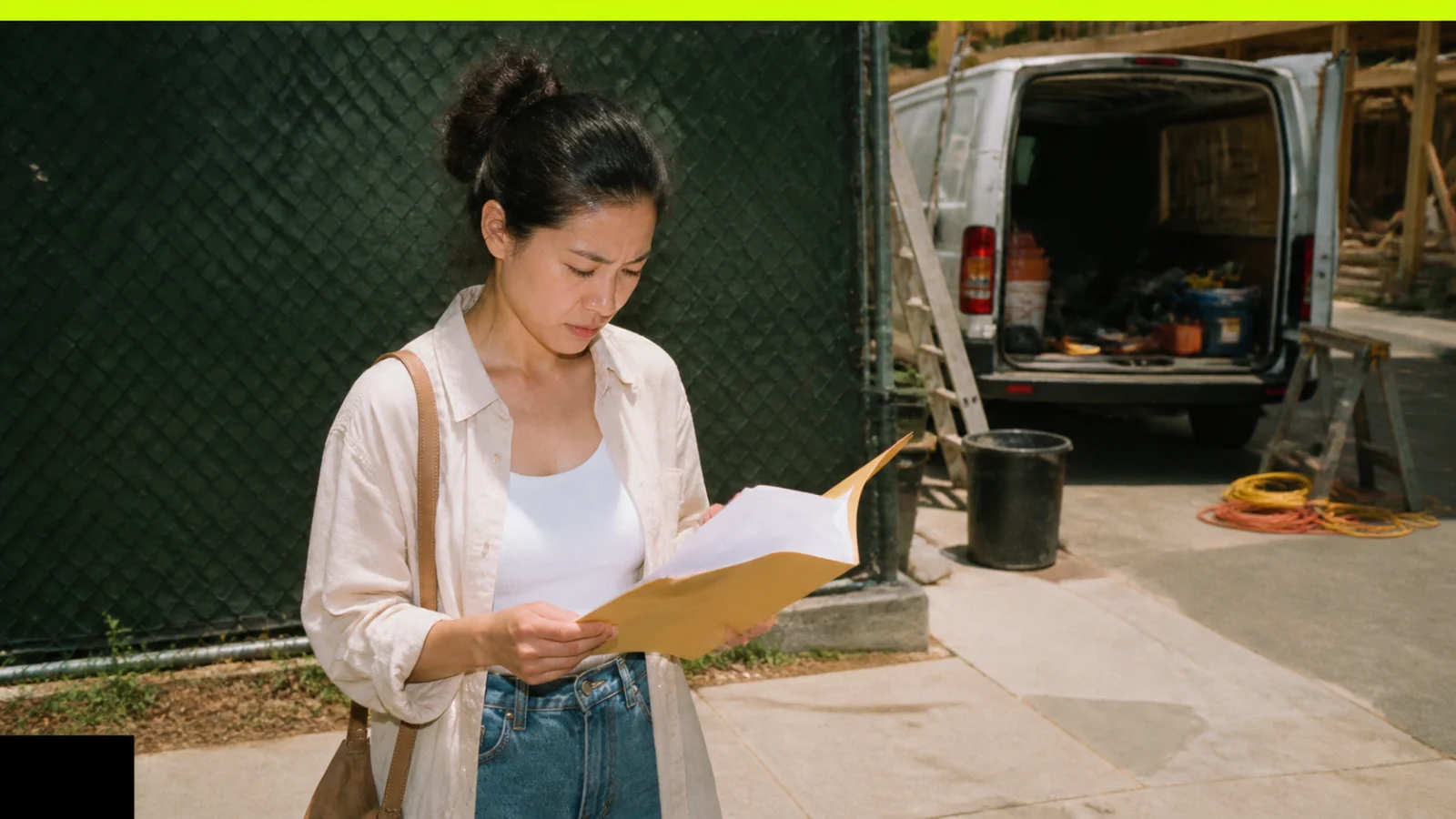
For outside repair or cleaning work, California Civil Code section 1950.5 generally requires the landlord to provide a copy of the bill, invoice, or receipt supplied by the provider. If that document omits the provider's name, address, or telephone number, the itemized statement should supply them. The statute does not prescribe a universal invoice template, so audit sufficiency by matching the provider, work, date, amount, rental, and photographs to the specific deduction and its written cost explanation.
Start with what the statute actually requires
The outside-work provision requires a copy of the bill, invoice, or receipt supplied by the person or entity performing the work. Provider contact information must be available through that document or the itemized statement.
Section 1950.5 does not list every field that must appear on a contractor invoice. Details such as the rental address, service date, quantity, unit price, payment status, and invoice number are powerful audit fields, but do not describe them as a mandatory statewide invoice template unless another applicable law or rule supplies that requirement.
Run a seven-point invoice audit
- Confirm the contractor's name and contact information.
- Match the customer and service address to the rental or explain the connection.
- Identify service dates and whether the document is an estimate, invoice, or paid receipt.
- Map each work description and amount to one deposit deduction.
- Recalculate labor, materials, tax, fees, discounts, and total.
- Compare the scope with before-work and after-work photographs.
- Check for unrelated units, upgrades, duplicate charges, credits, or insurance recovery.
An authentic invoice may still support too much work
A real vendor document can show that a charge was incurred while leaving causation, necessity, allocation, or reasonableness disputed. A contractor may have renovated a whole room even though the deposit deduction concerns one condition.
Compare the invoice with the move-in record, move-out photographs, pre-work photographs, final photographs, and the landlord's written cost explanation. Identify which invoice lines restore tenant-caused damage and which appear to cover ordinary wear, preexisting conditions, upgrades, or unrelated turnover.
Distinguish estimates, invoices, and proof of payment
An estimate forecasts a possible charge; an invoice requests or records payment for work; a receipt commonly indicates payment. Labels are not conclusive, so read the document's contents and status.
California permits a good-faith estimate in specified circumstances when work cannot reasonably be completed or provider documents are unavailable within 21 days. Once the repair is completed or the documentation is received, the landlord generally has 14 calendar days to complete the itemization and supporting-document requirements.
Ask for the exact missing link
Instead of requesting a better invoice, identify the missing fact: provider contact information, service address, final status, item allocation, work dates, photographs, or an explanation tying the scope to the deduction. Preserve the original document and your request.
An incomplete record can be significant, but no single omission guarantees a particular outcome. Evaluate the entire accounting and obtain legal advice when authenticity, fraud, licensing, or large damages are genuinely at issue.
Clear answers before your next step.
Must a contractor invoice list the rental address?+
Section 1950.5 does not expressly list the service address as a required invoice field. If it is absent, ask for evidence connecting the document and work to the rental and deduction.
Is an unpaid invoice enough for a deposit deduction?+
The statute refers to charges incurred and allows bills, invoices, or receipts, so proof of completed and paid work is not the only possible document. Confirm the work status, final amount, and later documentation.
What if one invoice covers several apartments?+
Request a reasonable allocation showing the work, materials, and amount attributed to your unit. Compare that allocation with photographs, measurements, and the contractor's scope.
Official sources used for this guide
- California Civil Code § 1950.5
- California Courts security deposit guide
- California Attorney General security deposit alert
- California DRE 2026 tenant guide
This article provides general self-help information for California renters. It is not legal advice, does not create an attorney-client relationship, and does not predict the outcome of a dispute. Rules and local protections can change.