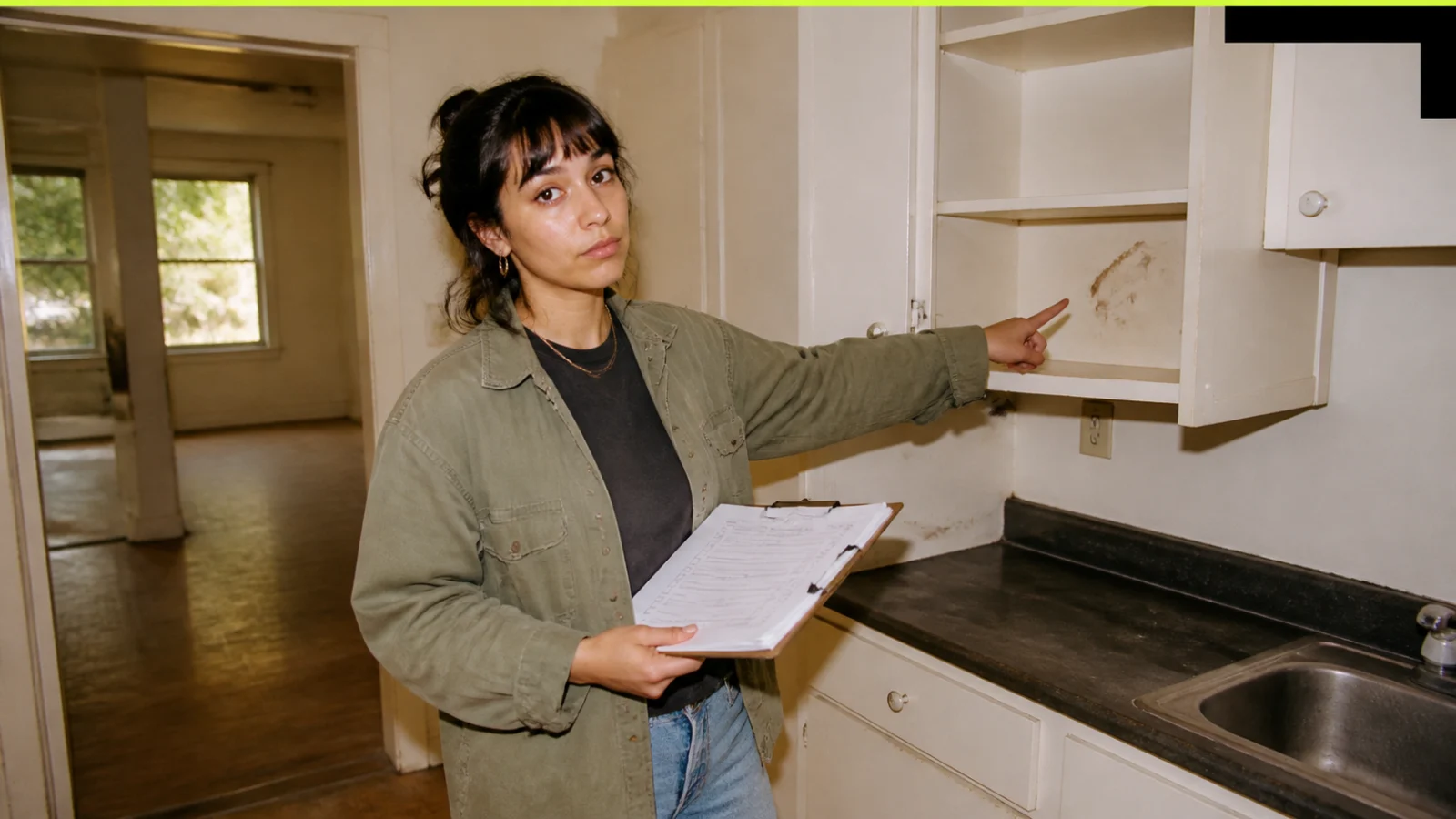
If a requested California initial inspection occurred and your belongings did not prevent identification, section 1950.5 generally limits repair or cleaning deductions to deficiencies identified in the inspection statement. Important exceptions include uncured listed items, damage occurring after the inspection, and conditions hidden by possessions. Compare the written list, timing, photographs, and final accounting before asserting that a deduction was barred.
Identify which inspection actually occurred
California's pre-move-out process is an initial inspection requested by the tenant after written notice of the option, generally no earlier than two weeks before the tenancy ends. It is meant to identify deficiencies the tenant may be able to remedy before possession is returned.
A casual walkthrough, maintenance visit, key handoff, or post-vacancy final inspection may not be the same event. Collect the request, scheduling messages, 48-hour notice or signed waiver, attendance record, and written inspection statement.
Test whether the statutory limitation fits the facts
- Confirm that you requested and received an initial inspection covered by section 1950.5.
- Determine whether belongings prevented the landlord from seeing the later-claimed location.
- Compare the inspection statement's exact words with the final deduction, not just broad room labels.
- Determine whether the condition arose between inspection and possession return.
- Check whether the final charge concerns an uncured listed deficiency, concealed condition, later damage, unpaid rent, or another permitted purpose.
Compare all three visual records
- Move-in photographs or the landlord's inception photographs when required
- Images from the initial inspection and your cure work
- Images taken after possession was returned but before claimed repairs or cleaning
- Images after the claimed work was completed when the statutory photograph requirement applies
- Metadata, room orientation, close-up and wide context, and who took each image
Audit the amount even if the condition existed
A condition may be chargeable in concept yet overstated in amount. Section 1950.5 limits claims to amounts reasonably necessary for authorized purposes and excludes ordinary wear, preexisting defects, and improvement beyond restoring the move-in condition.
Match the invoice to the photographed area, labor hours, materials, completion date, and scope. Ask whether a patch was possible, whether an entire replacement included an upgrade, and whether age or prior condition affects the restoration analysis.
Write a fact-specific dispute
Quote the inspection statement, identify the omitted charge, state whether the area was visible and unchanged after inspection, and attach dated photographs. Request the landlord's before-work and after-work images, invoice, and explanation of any exception relied on.
Avoid saying that every unlisted charge is automatically illegal. A careful letter preserves credibility and gives a court or advisor the facts needed to apply the statute. It cannot guarantee that the deduction will be reversed.
Clear answers before your next step.
Can a landlord charge for something omitted from the initial inspection list?+
Sometimes. The statute contains limitations and exceptions, including later damage and conditions not identified because possessions blocked the view. The exact inspection facts matter.
What if the landlord never offered an initial inspection?+
Preserve the termination notices and communications. Failure to give the required written notice may be relevant, but it does not by itself prove every later deduction invalid.
Is the key-return walkthrough the legally relevant inspection?+
Not necessarily. Determine whether it followed the initial-inspection notice and request process or was only an informal or final walkthrough.
Official sources used for this guide
- California Civil Code § 1950.5
- California Courts security deposit guide
- California Attorney General security deposit guide
- California DRE 2026 tenant guide
This article provides general self-help information for California renters. It is not legal advice, does not create an attorney-client relationship, and does not predict the outcome of a dispute. Rules and local protections can change.