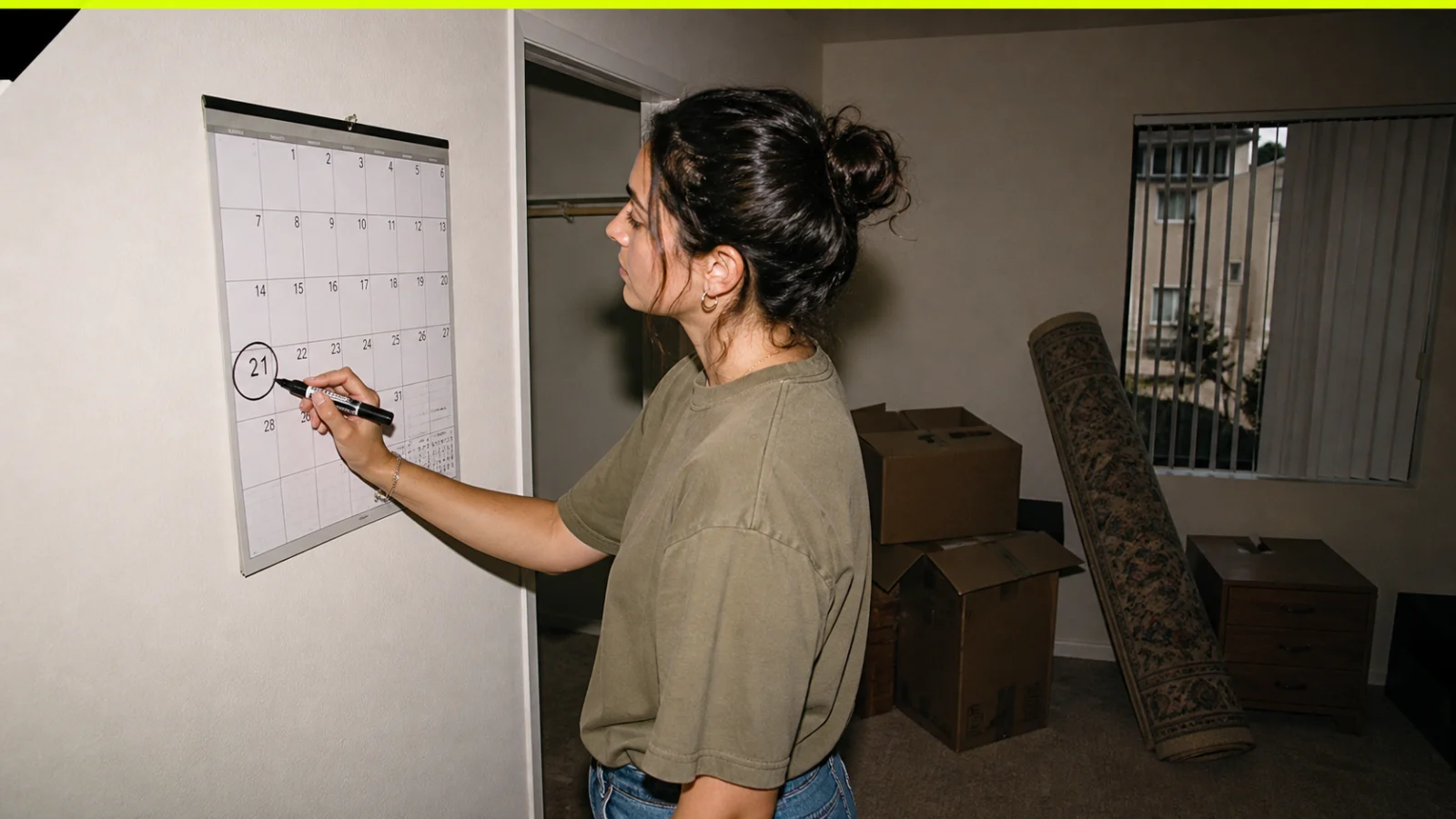
California permits a good-faith estimate when landlord-performed repairs cannot reasonably be completed within 21 calendar days after move-out or when outside service, material, or supply documents are not yet in the landlord's possession. The estimated deduction belongs with the itemized statement; if provider documents are missing, the statement must include that provider's name, address, and telephone number. The statute does not mandate a special estimate form, so scope, calculation, reason, and timing are practical audit fields rather than a separate statutory checklist.
An estimate is a limited bridge to final documentation
The estimate provision addresses two timing problems: landlord or employee repairs that cannot reasonably be finished within 21 days, and outside documents that are not yet in the landlord's possession by then. It does not make every uncertain or placeholder amount self-validating.
The landlord may deduct the good-faith estimate and provide it with the itemized statement. The amount still must relate to a purpose allowed by section 1950.5 and to reasonable restoration rather than ordinary wear, preexisting conditions, or unsupported improvement.
Separate required information from useful audit detail
The statute expressly requires an itemized statement showing the basis and amount of deductions. When outside documents are missing, it also calls for the provider's name, address, and telephone number. It does not set out a standalone estimate template with a mandatory list of line items.
For a meaningful review, ask for the condition, proposed work, labor, materials, quantities, price basis, expected completion, reason final work or documents are unavailable, and photographs. Describe these as audit requests, not as fields the statute always names word for word.
Audit the estimate in six passes
- Verify the move-out date and the 21-day deadline.
- Identify which statutory circumstance is said to justify the estimate.
- Match each estimated amount to an itemized deduction and photographed condition.
- Check provider contact details when outside documents are unavailable.
- Test quantities, rates, repair scope, age, and prior condition.
- Calendar follow-up from completion or receipt of documents, not from an assumed date.
Track the event that starts the 14-day follow-up
Within 14 calendar days after completing the repair or receiving the documentation, the landlord generally must complete the itemization and supporting-document requirements. Those two trigger events can occur on different dates for different deductions.
Preserve the initial estimate, communications about scheduling, completion photographs, final invoice or labor detail, revised accounting, and any additional refund. If the completion date is unknown, request it instead of asserting that the follow-up period has already expired.
Compare estimated and final numbers line by line
Create columns for the estimate, final supported cost, amount retained, refund or additional demand, and variance explanation. A lower final cost may affect the balance retained; a higher final cost still requires scrutiny of necessity, documentation, and whether the communication is a deposit reconciliation or separate claim.
A good-faith label does not guarantee compliance or bad faith. Avoid accusing the landlord based only on a variance; ask for the final record and evaluate the chronology before choosing a dispute step.
Clear answers before your next step.
Must a good-faith estimate be from a licensed contractor?+
Section 1950.5's estimate provision does not state a universal contractor-license requirement for every estimate. Other licensing laws may apply to particular work, so check the facts separately.
Can the estimate be a round number?+
A round number is not automatically invalid, but an unexplained amount is harder to evaluate. Ask for the scope, rate, quantities, price basis, photographs, and reason final documentation was unavailable.
When is the final documentation due?+
The statute generally requires completion within 14 calendar days after the repair is completed or the supporting documentation is received. The trigger depends on what actually occurred.
Official sources used for this guide
- California Civil Code § 1950.5
- California Courts security deposit guide
- California Attorney General security deposit alert
- California DRE 2026 tenant guide
This article provides general self-help information for California renters. It is not legal advice, does not create an attorney-client relationship, and does not predict the outcome of a dispute. Rules and local protections can change.